How to Ask for a Testimonial: Timing, Wording, and 5 Copy-Paste Scripts
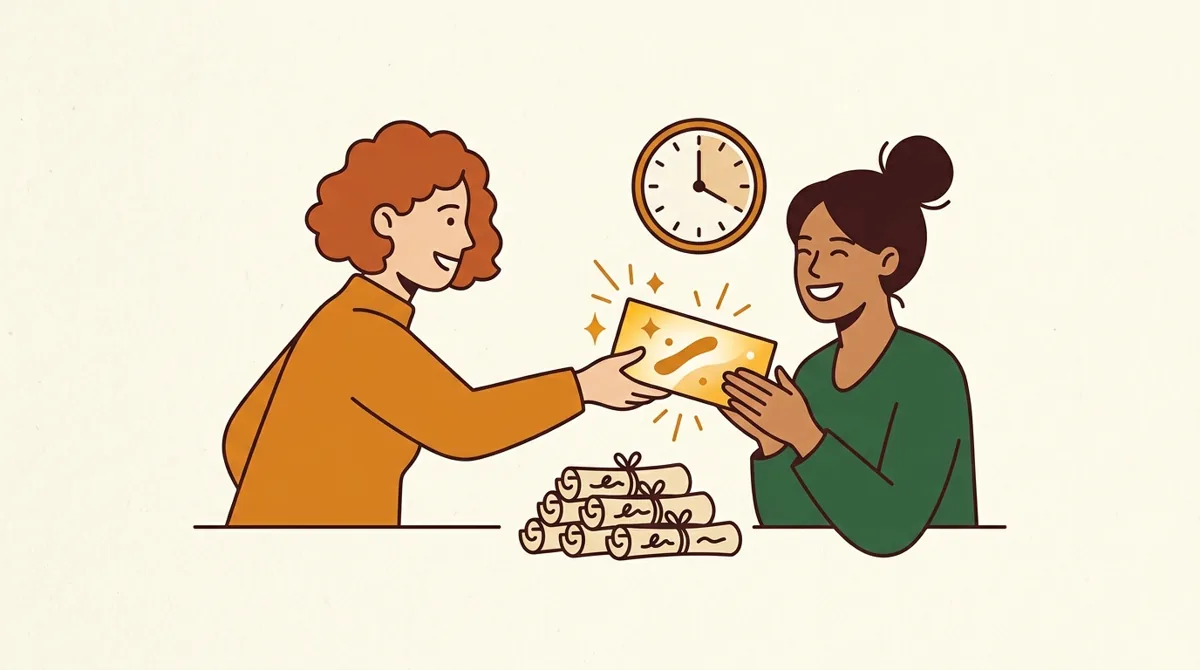
The best way to ask for a testimonial is to do it at the moment of peak satisfaction — right after you deliver or right after a strong result — and make saying yes a 2-minute task: one specific question, plus an offer to draft something they can simply edit. Asked this way, most happy clients say yes; asked vaguely ("any feedback?") or months late, most say nothing.
For creators and freelancers, testimonials are the cheapest social proof you can build. A brand deciding whether to pay you $300 for a video wants evidence someone else already did and was glad. Here's when to ask, how to phrase it, and five scripts to steal.
- Delivery dayDeliver + recap the result
Send the final files with the performance numbers — gratitude is fresh and they have a figure to quote.
- Same messageMake the 2-minute ask
One specific question ("what surprised you about the results?") — never a six-question form.
- Right afterOffer a draft
2–3 sentences based on what they actually said, for them to edit. Never publish anything unapproved.
- On approvalDisplay it where brands decide
Media kit and pitch emails, your public creator profile, pinned content, negotiation follow-ups.
- Every deal afterLet it compound
Each quote lowers the next brand’s perceived risk — an easier close, which produces the next testimonial.
Source: framework as described in this guide.
When should you ask for a testimonial?
Timing beats wording. Ask when the other person is feeling the value:
| Moment | Why it works |
|---|---|
| Right after final delivery | Effort is visible, gratitude is fresh |
| The day a strong result lands | They have a number to quote ("2x our benchmark") |
| When they renew, rebook, or refer you | The testimonial is already true in their behavior |
| After an unprompted compliment | You're just asking to write down what they said |
| Months later (with a memory-jogger) | Works if you remind them of the specific result first |
The compliment case is the easiest close in business: "That's great to hear — could I quote you on that? I can tidy it into two sentences for you to approve."
How do you ask so people actually say yes?
Three rules:
- Make it a 2-minute task. Never send a form with six questions. One message, one ask, answerable from a phone.
- Ask something specific. "What surprised you about the results?" or "What made you decide to work with me again?" pulls out concrete, quotable lines. "Any feedback?" pulls out "great to work with!" — which persuades no one.
- Offer a draft. Busy people stall on blank pages. "Want me to draft 2-3 sentences based on the campaign results, and you edit whatever you like?" removes the last bit of friction. Base the draft on things they actually said, and never publish anything unapproved.
5 copy-paste testimonial scripts
1. After a brand deal (sponsored post on your account):
Hi [name] — glad the video landed! It hit [X views / X% engagement — check yours with the engagement rate calculator], which beat my account average. Quick ask: would you mind a 2-sentence testimonial about working together that I can feature for future partners? Happy to draft something from the results for you to edit — takes you 60 seconds.
(Know your real numbers before sending — the engagement rate calculator gives you the figure to cite.)
2. After UGC delivery:
Hi [name] — all final files are in the folder, licensed per our agreement. If you were happy with the process, a short testimonial would mean a lot — even two sentences on turnaround or how the content performed in ads. Want me to send a draft you can tweak?
3. Client you worked with months ago:
Hi [name] — hope [product/campaign] has been going well since we wrapped in [month]. I'm putting together my portfolio and that project is one I'm proudest of — [specific result, e.g. "the launch video that did 40k views"]. Would you be open to a 2-sentence testimonial about it? I can draft it from my notes so it takes you a minute.
4. Service business (personal trainer, coach, designer — same skeleton works):
Hey [name] — seeing you hit [specific result: your 5k time, the rebrand going live] made my week. Could I ask a small favor? A 2-3 sentence testimonial about what changed since we started would help other people like you find me. I can draft it from your progress if that's easier — you just edit.
5. LinkedIn / DM version (short-form):
Hey [name]! Quick one — I'm updating my creator profile and would love a 1-2 line testimonial from our [campaign/project]. Something on the results or the process, whatever felt true. I can draft it if you'd rather just approve. Either way, loved working with you.
Adapt the variables, keep the shape: context, specific hook, tiny ask, draft offer. If you want help tightening the wording for your niche and tone, the UGC script generator works surprisingly well for short business messages, not just video scripts.
Where should you display testimonials?
A testimonial nobody sees converts nobody. Priority order for creators:
- Your media kit and pitch emails — one strong quote under your stats, right where a brand decides whether to reply. Pairs well with the rate you quote from the brand deal rate calculator.
- Your public creator profile — the link you send brands should carry the quotes.
- Pinned content and link-in-bio — a "results" highlight or pinned post with brand feedback.
- Proposals and negotiation follow-ups — "here's what [brand] said after a similar campaign" is a rate-defending sentence.
Why testimonials on a live profile compound
A testimonial in a PDF media kit is seen once, by one brand, then buried in an inbox. The same testimonial on a live creator profile works differently: every future brand that clicks your link sees it, next to your current follower stats and featured work. Each new quote lowers the perceived risk for the next brand — which makes the next deal easier to close, which produces the next testimonial. That loop is why creators with visible proof raise rates faster than creators with identical numbers and no proof, and it's the same mechanism that turns gifted collaborations into paid ones.
A CreaMate creator profile gives you that page for free — live per-platform stats, niche tags, a featured-work portfolio, a "why work with me" section where your best quotes live, and a contact button — all at one link that's never out of date. Set yours up free, then send script #1 to the last brand you worked with.
CreaMate is an AI co-pilot for short-form creators (TikTok/Reels/Shorts) that turns one topic into hooks, scripts, hashtags and cover briefs, and helps small creators price and land brand deals.
FAQ
- How do you ask a client for a testimonial?
- Ask right after you deliver or right after they see a strong result, keep the request to a 2-minute task, and offer a short draft they can edit or approve. Specific prompts ('what surprised you about working together?') get better quotes than 'any feedback?'
- How do you ask a customer for a testimonial?
- Same principle as with a client: catch them at the moment of satisfaction, make responding effortless, and give them something to react to. A two-line message with one specific question outperforms a long survey every time.
- How do you ask for a testimonial from a brand after a collab?
- Send the ask together with your performance recap, while the results are fresh. Something like: 'Glad the video beat benchmarks — would you mind a 2-sentence testimonial I can feature? Happy to draft something for you to edit.' Brands say yes to this far more often than creators expect.
- Is it OK to write a draft testimonial for someone to approve?
- Yes — it's common practice and most busy clients appreciate it. Draft 2-3 honest sentences based on what they actually said during the project, and invite them to edit anything. Never publish words they haven't approved.
- How long should a testimonial be?
- Two to three sentences is the sweet spot: one on the problem or doubt, one on the result, ideally with a number. Long testimonials get skimmed; short specific ones get read and believed.
- When is the best time to ask for a testimonial?
- Within a week of delivery, or the day a strong result lands — a video outperforming benchmarks, a campaign hitting its goal, a client renewing. The longer you wait, the vaguer and less enthusiastic the quote gets.