UGC Usage Rights: What They Are, What to Charge, and the Red Flags
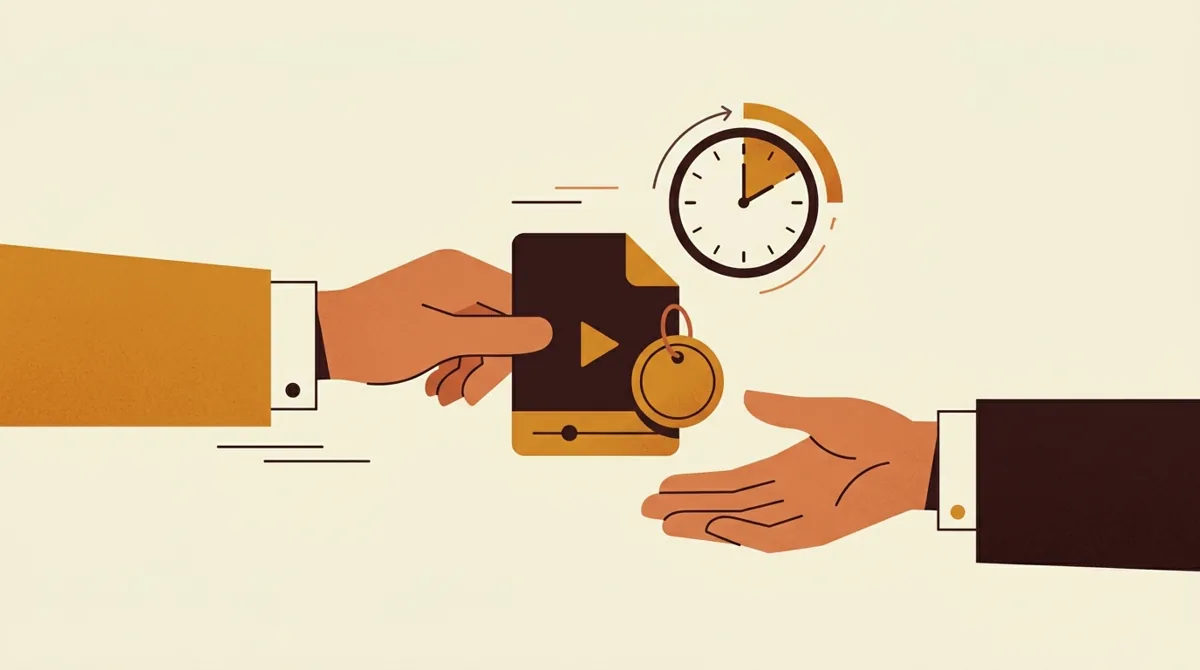
UGC usage rights are the license you grant a brand to use the content you made for them — covering where they can publish it, whether they can put ad spend behind it, for how long, and whether they can re-edit it. The content itself has one price; the license to use it has another. Creators who don't separate the two routinely give away the most valuable part of the deal for free.
If you're new to UGC as a format, read what UGC is first — this guide assumes you're already delivering videos to brands and need to price the rights correctly.
| Usage right | Typical price | What the brand gets |
|---|---|---|
| Organic, brand channels, 30–90 days | Often included in base rate | Posting on their own social accounts |
| Organic, extended (6–12 months) | +10–25% of base | Longer shelf life on their channels |
| Paid ads / whitelisting, per 90 days | +20–50% of base | Ad spend behind your video |
| Paid ads, 12 months | +75–150% of base | A year-long ad license |
| Perpetual rights | 2–4x base rate | Your content, forever — grant rarely |
| Exclusivity (per 90 days, narrow category) | +25–50% of base | You skip competitor deals during the term |
Source: pricing as covered in this guide (typical 2026 rate-card conventions, not any single study).
Why do usage rights cost extra?
Because the value of your video doesn't end when you deliver it. A UGC video that converts becomes an ad the brand can run for months, reaching audiences far beyond anything the content fee covered. You own the copyright to what you create; the brand is buying a license, and licenses are scoped and priced. When a brand says "we just need full rights, it's standard," what they're actually asking for is your best-performing asset, forever, at a one-time price.
The 5 dimensions of usage rights
Every usage-rights conversation comes down to five questions. Nail these down in writing before you deliver:
- Channels — where can they use it? Their organic social accounts? Website and email? Retail displays? Each channel expands the license.
- Paid vs organic — can they put money behind it? Organic posting on their own accounts is the cheapest right. Paid ads (including whitelisting and Spark Ads from your handle) is where the real value — and the real fee — lives.
- Duration — for how long? 30, 90, 180 days, 12 months, or perpetuity. Shorter terms mean renewal revenue for you.
- Exclusivity — can you work with competitors during the term? Exclusivity restricts your income, so it's always a paid add-on, priced by how broad the category is and how long it lasts.
- Editing rights — can they cut, re-caption, or remix your video? Light trimming is normal; full re-editing that changes your message or puts words in your mouth deserves limits.
What is standard pricing for UGC usage rights?
As of 2026, common market practice among UGC creators looks like this — attributed to typical rate-card conventions, not any single study:
| Usage right | Typical pricing |
|---|---|
| Organic, brand's own social channels, 30-90 days | Often included in base rate |
| Organic, extended (6-12 months) | +10-25% of base rate |
| Paid ads / whitelisting, per 90 days | +20-50% of base rate |
| Paid ads, 12 months | +75-150% of base rate |
| Perpetual rights (if you grant them at all) | 2-4x base rate |
| Exclusivity (per 90 days, narrow category) | +25-50% of base rate |
So if your base rate for one video is $200, a brand wanting to run it as an ad for six months should expect roughly $280-400 total, not $200. Work out your own base with the UGC rate calculator, and if the deal is a sponsored post on your own account rather than UGC, use the brand deal rate calculator instead — the pricing logic differs, as explained in how to price your first brand deal.
One structural tip: price renewals into the deal. "Paid usage for 90 days, renewable at $X per additional 90 days" turns one deliverable into recurring revenue and gives the brand a low-commitment way to start.
What are the red flags in usage-rights clauses?
Read the contract for these phrases:
- "In perpetuity" — no end date, ever. The single most expensive phrase in UGC. Counter with a fixed term.
- "All media, known or hereafter devised" — every channel that exists or will ever exist. Counter by listing specific channels.
- "Work for hire" — you don't just license the content; you surrender the copyright entirely. Sometimes acceptable, but only at a price that reflects giving up everything, forever.
- "Royalty-free, irrevocable, transferable, sublicensable" — the brand can hand your content to anyone else. Transferable and sublicensable rights deserve their own markup or a strike-through.
- Usage buried in a gifted deal — free product plus full ad rights is the worst trade in the creator economy. If a gifted collaboration brief mentions ads or "content usage," quote your license fee.
None of these are automatically deal-killers — they're pricing signals. Perpetual, all-media, sublicensable rights can be fine at 4x. They're a problem at 0x.
How do you say no without losing the deal?
You almost never have to say a flat no — you reframe. Three lines that work:
- The scope line: "Happy to include organic usage on your channels for 90 days in the base rate. Paid ad usage is +35% per 90 days — want me to add that to the quote?"
- The perpetuity counter: "I don't license content in perpetuity, but I can do 12 months of paid usage at [2x base], renewable after that."
- The gifted-deal line: "For gifted collaborations I keep all usage rights. If you'd like to run the video as an ad, my license starts at $[X] for 90 days."
Delivering strong content makes these conversations easier — a video the brand is excited about is a video they'll pay to license properly. The free UGC script generator helps you get from brief to a converting script draft fast.
One more advantage worth building: brands negotiate rights more readily with creators who look established. A public creator profile with your niche, portfolio, and stats — the kind of social proof a screenshot can't provide — signals that you know your value before the negotiation starts. You can set one up free, along with your rate baseline, at CreaMate.
CreaMate is an AI co-pilot for short-form creators (TikTok/Reels/Shorts) that turns one topic into hooks, scripts, hashtags and cover briefs, and helps small creators price and land brand deals.
FAQ
- What are UGC usage rights?
- Usage rights are the license you grant a brand to use content you created — defining where they can post it, whether they can run it as paid ads, for how long, and whether they can edit it. The content fee and the usage license are two separate things with two separate prices.
- How much should I charge for UGC usage rights?
- Organic use on the brand's own channels for 30-90 days is often included in the base rate. Paid ad usage typically adds 20-50% of your base rate per 90 days. Perpetual rights, when you grant them at all, commonly run 2-4x the base rate.
- What does 'in perpetuity' mean in a UGC contract?
- It means the brand can use your content forever, with no end date and no renewal payment. Combined with 'all media' it lets them run your face in any ad, anywhere, indefinitely. Never accept perpetuity at a standard rate — counter with a fixed term or price it at 2-4x.
- Are usage rights included in the UGC price?
- Only limited organic rights usually are — typically 30-90 days on the brand's own social channels. Paid advertising, whitelisting, extended durations, and exclusivity are all add-ons that get their own line items on your quote.
- Can a brand use my content in ads without paying for usage rights?
- Not legally, if your agreement didn't grant ad usage. You own the copyright to content you create unless you sign it away. If you spot your video running as an ad beyond the agreed terms, send a polite invoice for the extended usage — most brands pay it.